 Red Chevron Studios · on Roblox

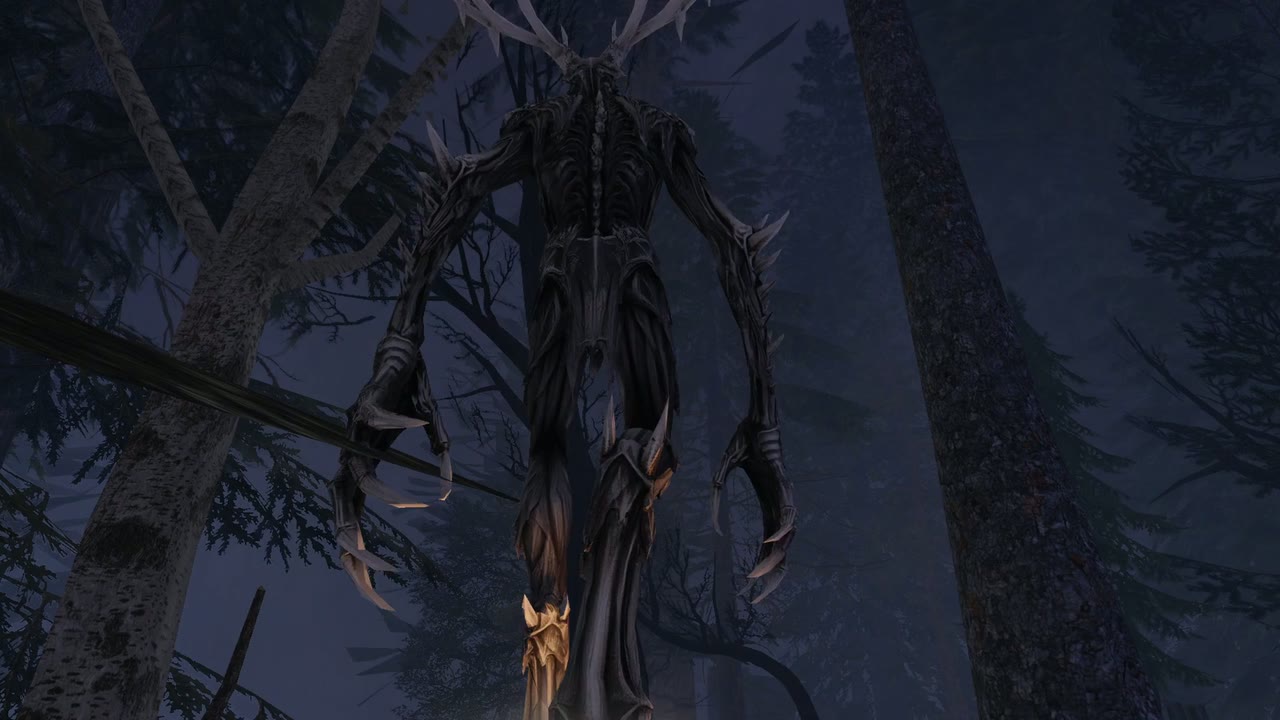
Four hunters with a plan, one monster that grows
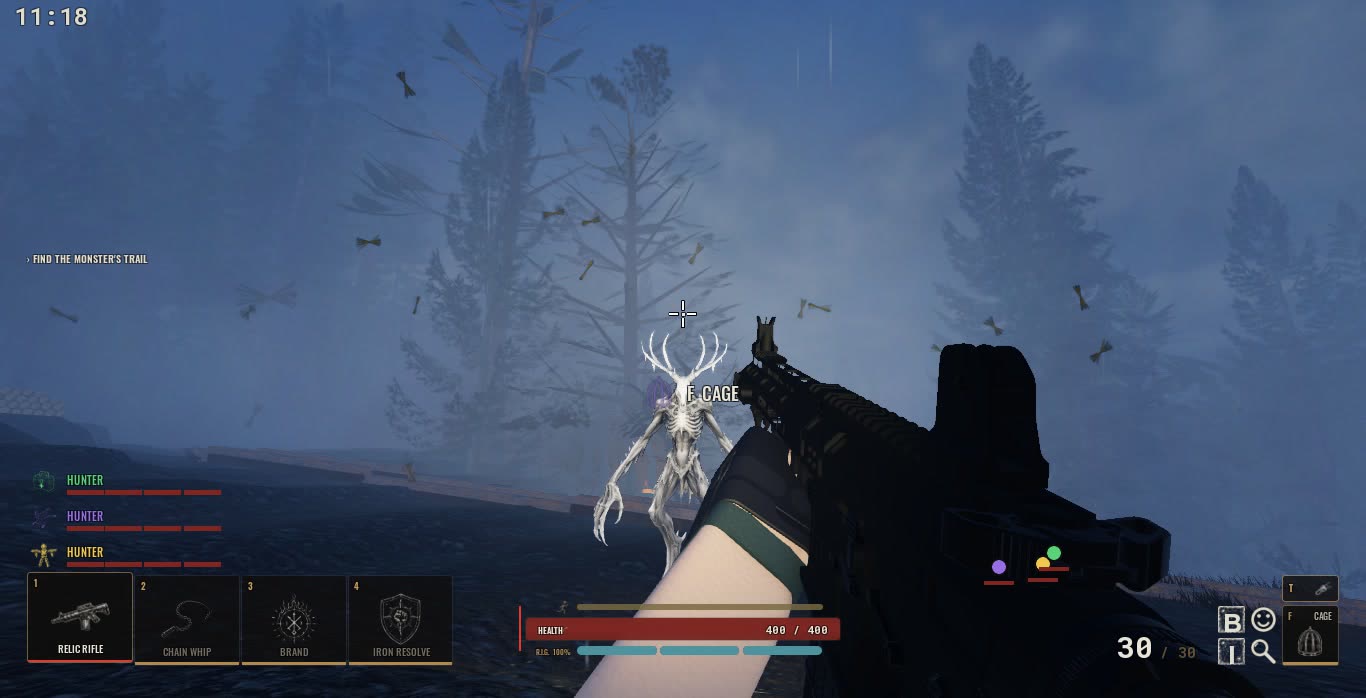
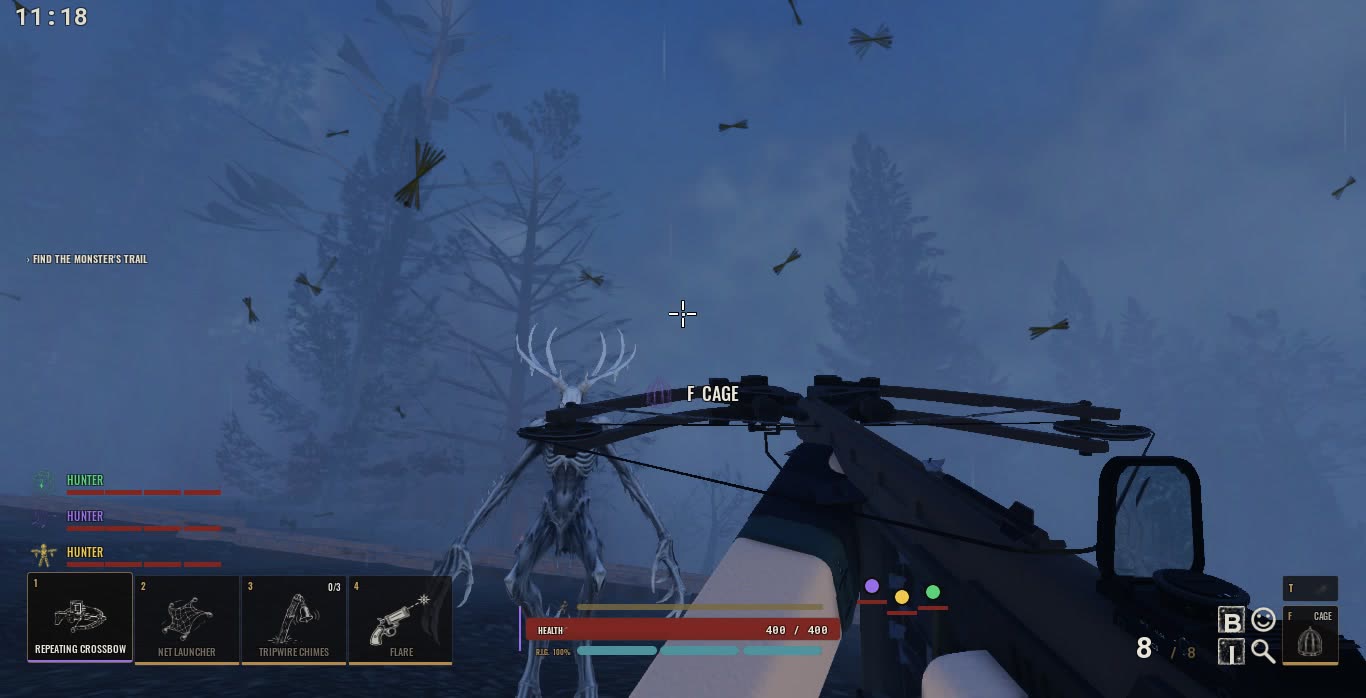
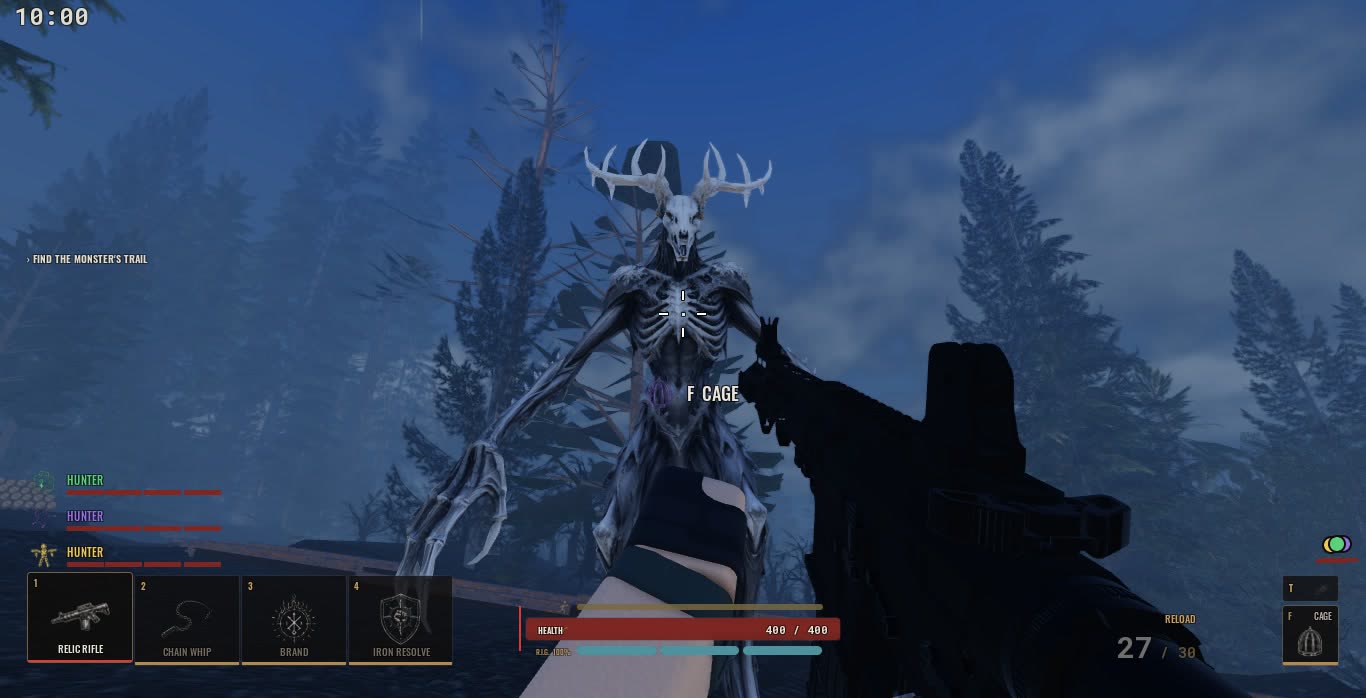
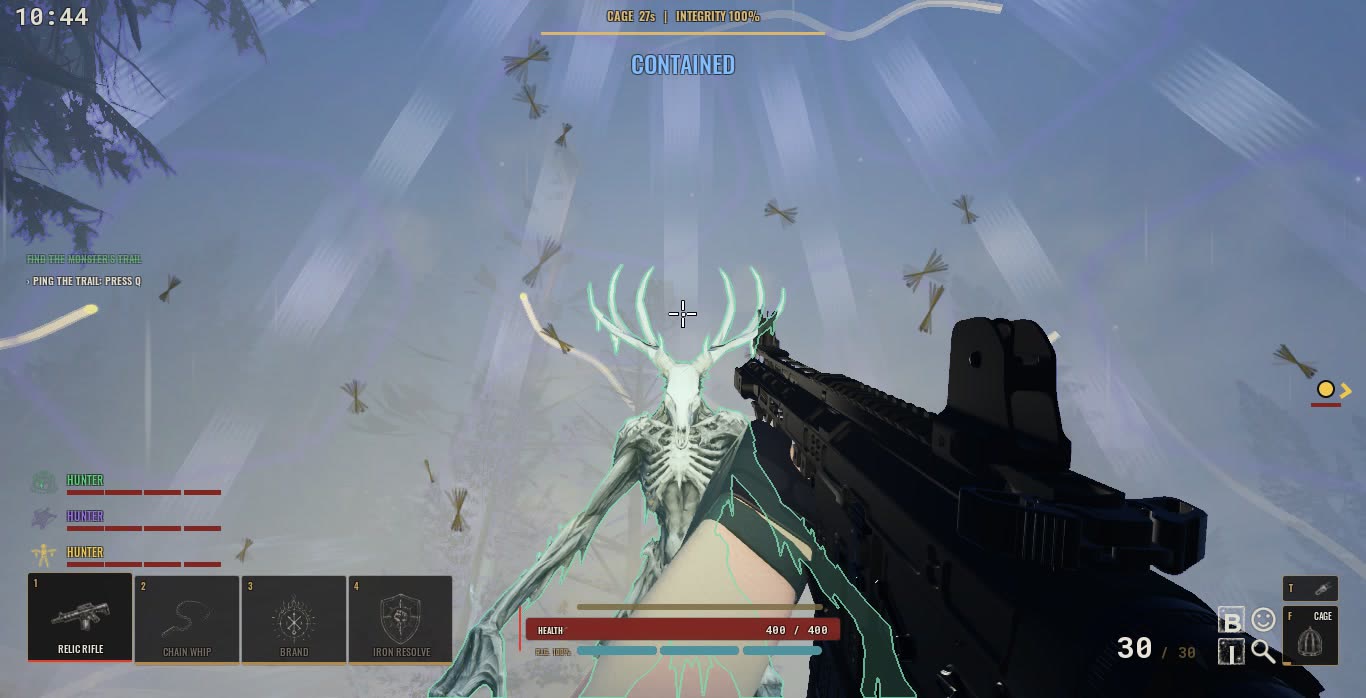
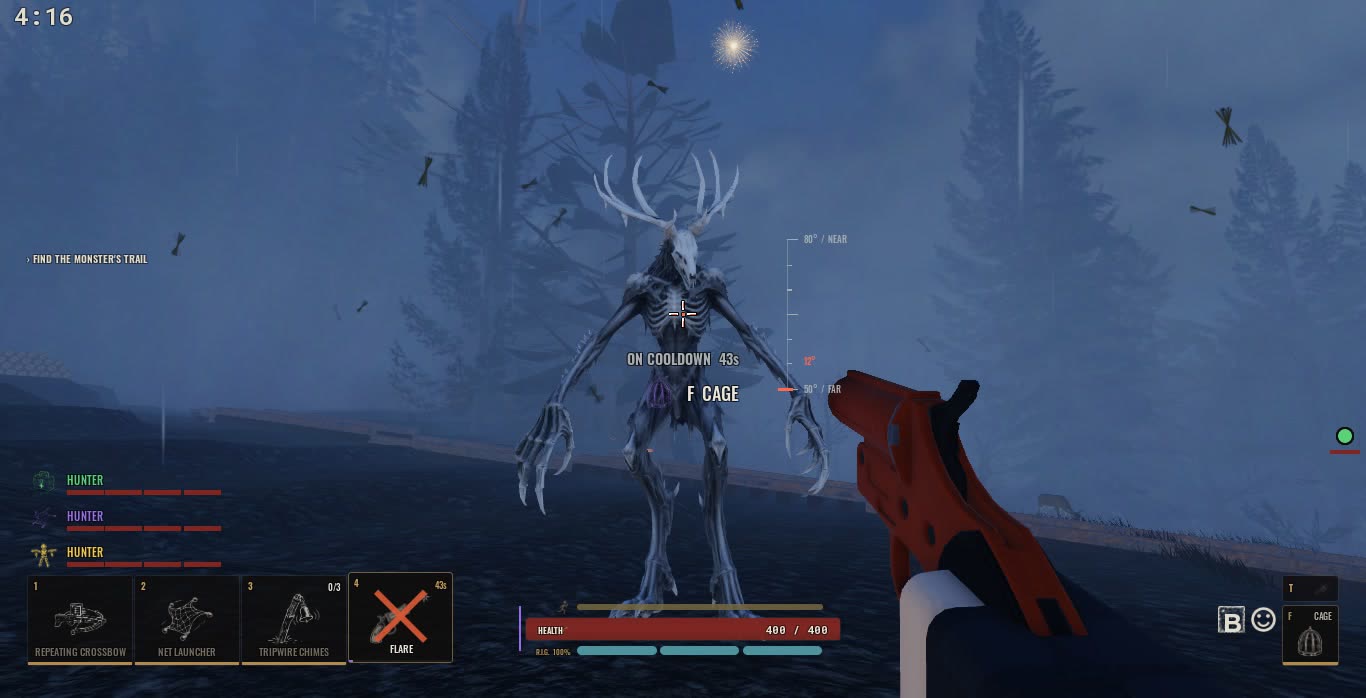
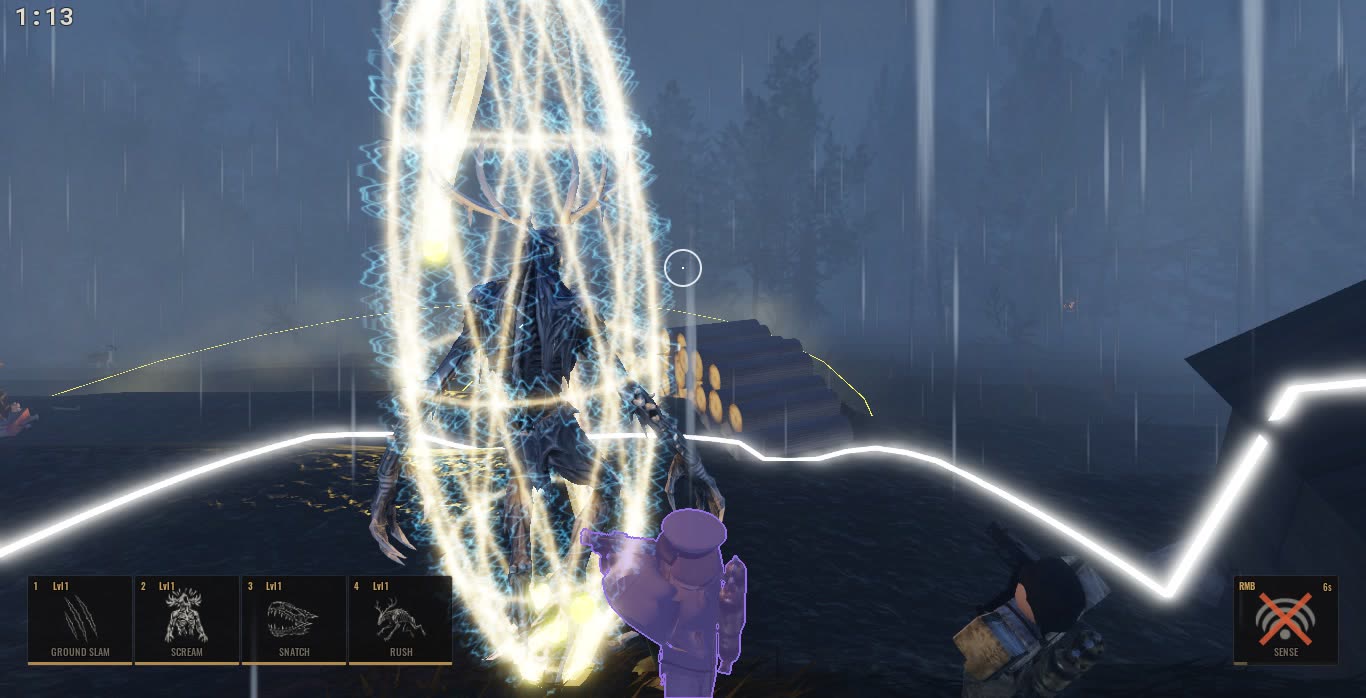
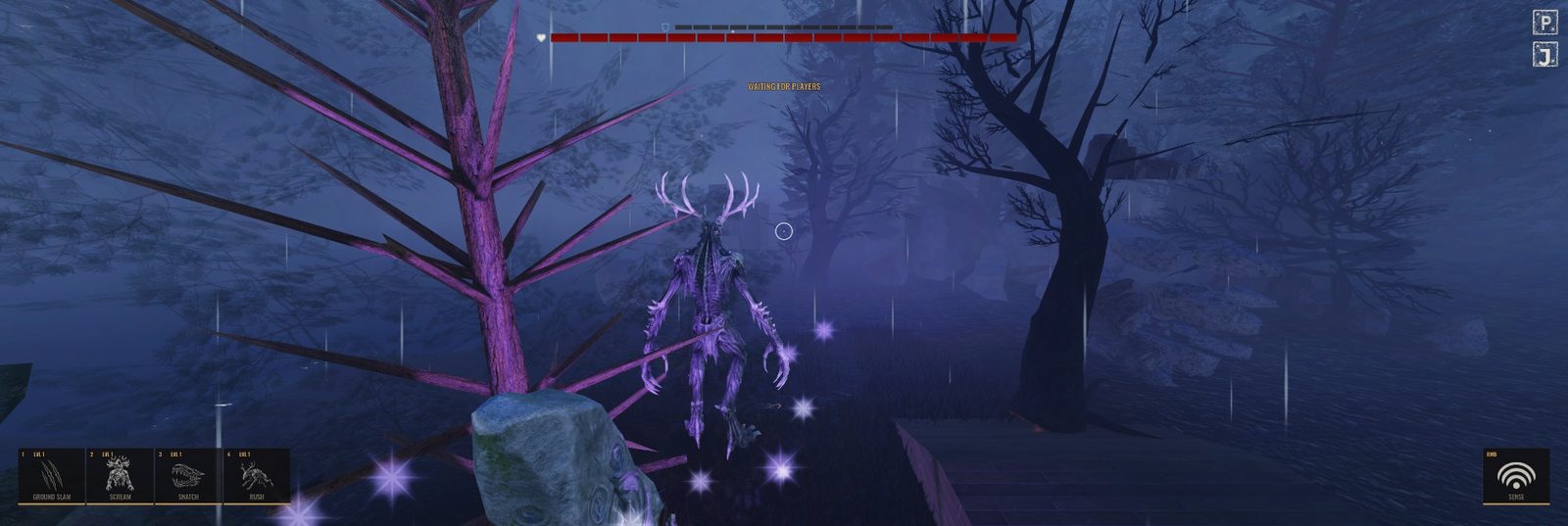
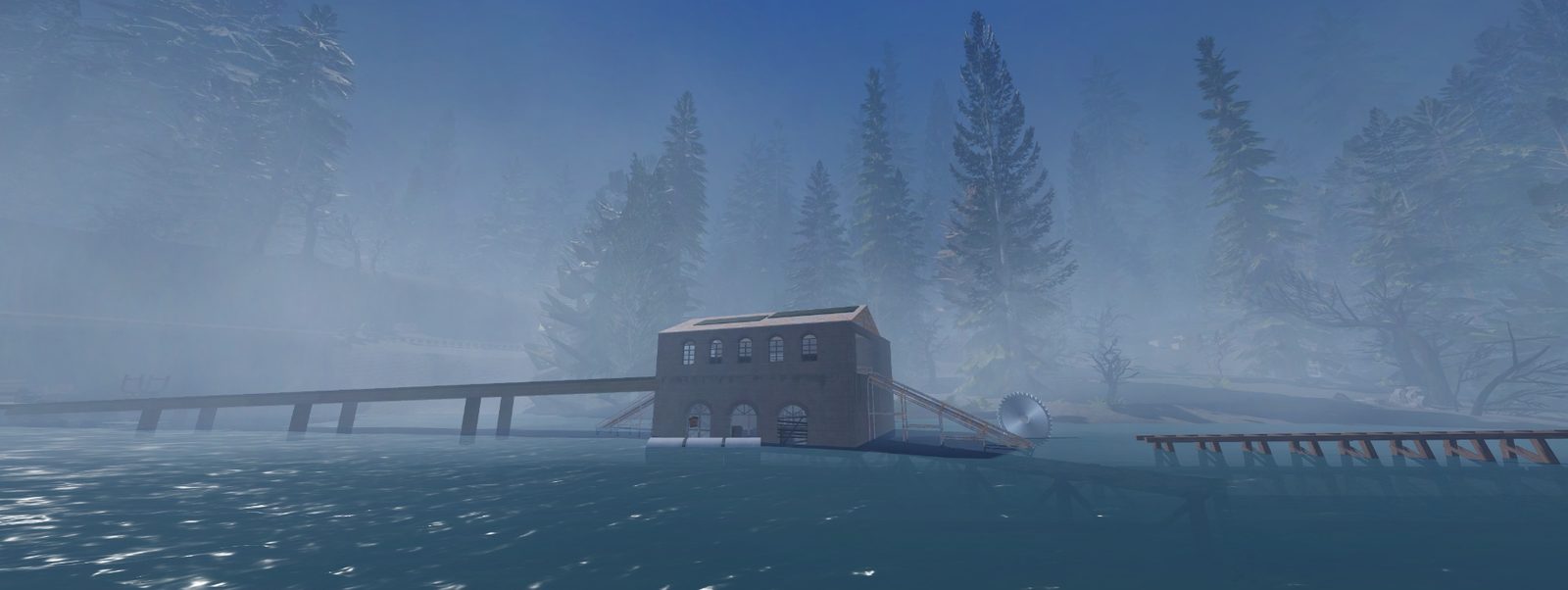
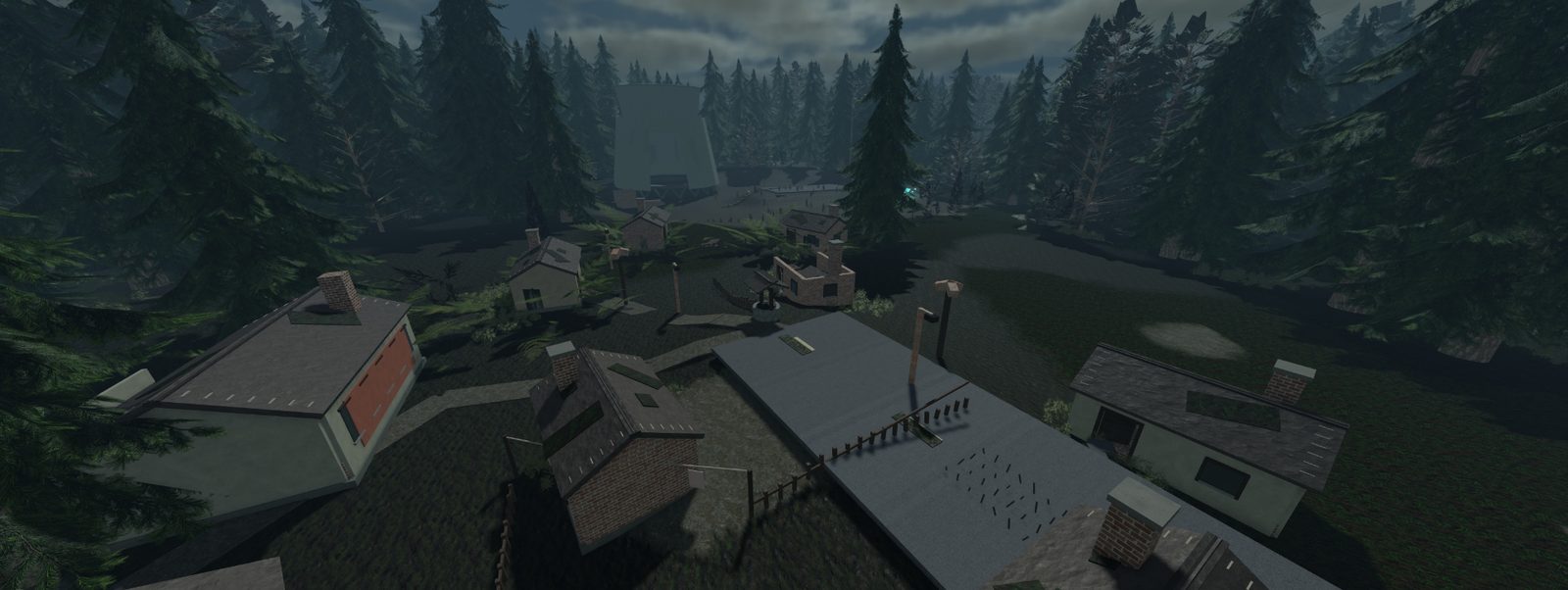
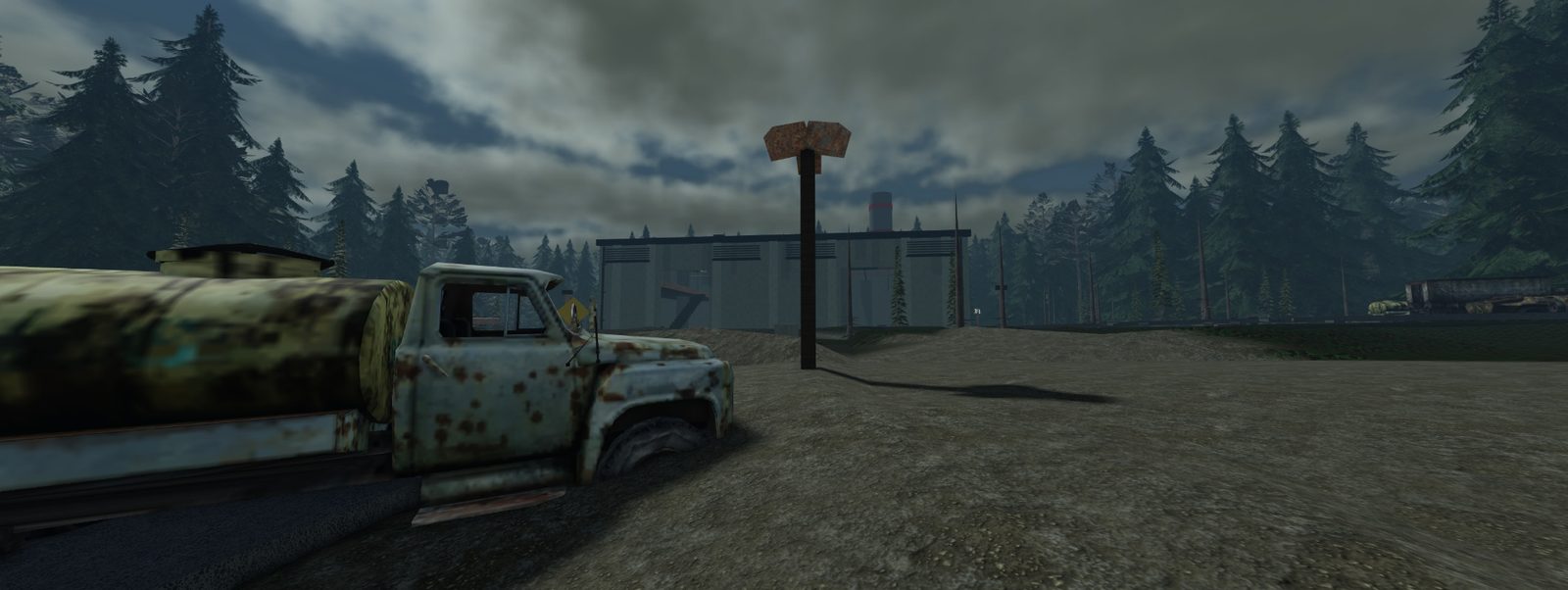
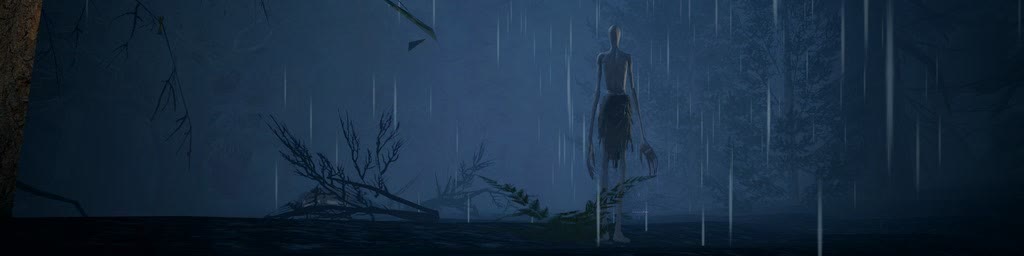
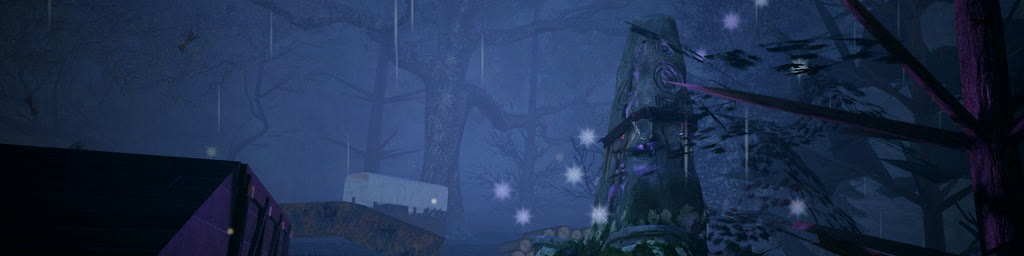
Stills captured in a real match on BLACKPINE in the storm, on a laptop screen with the game's own HUD; the teammates are the game's bot hunters, which fill empty seats. The 57-second teaser plays at the top of the web page: corporalv1.github.io/built-with-claude/what-we-keep-out.html
Counts measured from the project repository on 1 November 2026; the line count leaves out the bots' generated walking maps. First commit 3 July 2026.
Roblox has the audience for a monster hunt. Nobody has built the fight-back version.
The gap
Every asymmetric game on Roblox is a corridor chase: survivors run and hide. The appetite is proven: Forsaken, a hardcore asymmetric game, reached roughly 80,000 players at once and billions of visits. What does not exist on Roblox is the other half of the genre: armed hunters with a plan, against a monster that grows.
On PC and console that formula had a devoted audience and a famous collapse. We studied why those games died and designed WHAT WE KEEP OUT against each cause, starting with the first rule below.
The one rule
Both sides must be fun. If only one side is having fun, the game dies.
A 4v1 needs four hunters for every monster, so the hunter side carries four times the population. The bar every feature has to clear: a solo hunter with three strangers and no mic still has fun in a match they lose.
Five hand-built guns with first-person arms, aim-down-sights and authored reloads. Hunters fight back; that is the point.
A tracking economy (wound trails, birds, bells, footprints), a three-stage evolution with upgrade choices, and four classes that need each other.
Atmospheric horror, skill-based combat and short, replayable matches. Built for teens and adults who want a game with depth.
Two different games in one match
A monster player and a hunter player want different things. Each side has its own complete loop, and they collide in the fight.
Play the Monster
- Stalk. Start weak and hunted. Crouch-stalk, wall-crawl and leap through the forest while four armed players look for you.
- Feed. Kill deer, stags and bears (they fight back), and feed on downed hunters to fill your meat meter.
- Mutate. Cocoon and evolve through three stages, growing larger, tougher and stronger, and spend points to upgrade your abilities.
- Break the Relic. At Stage 3, smash the hunters' Relic, or wipe all four hunters, to win.
Play a Hunter
- Track. Read the woods: glowing wound trails, startled birds, tripwire bells, footprints, and the silence where it already ate.
- Cage. Close in and raise the team Cage, a plasma jail that pins the monster so the fight happens on your terms.
- Fight. Four classes (damage, healer, control, support) combine guns, gadgets and class abilities.
- Survive. Revive downed teammates, hold the Relic, and kill it before Stage 3, or run out the clock.
No player is ever left with nothing to do: a downed hunter crawls and calls out intel, a dead one spectates their team and respawns on a timer, and a caged monster can always pay to break out.
Two monsters, four hunter classes
The Wendigo
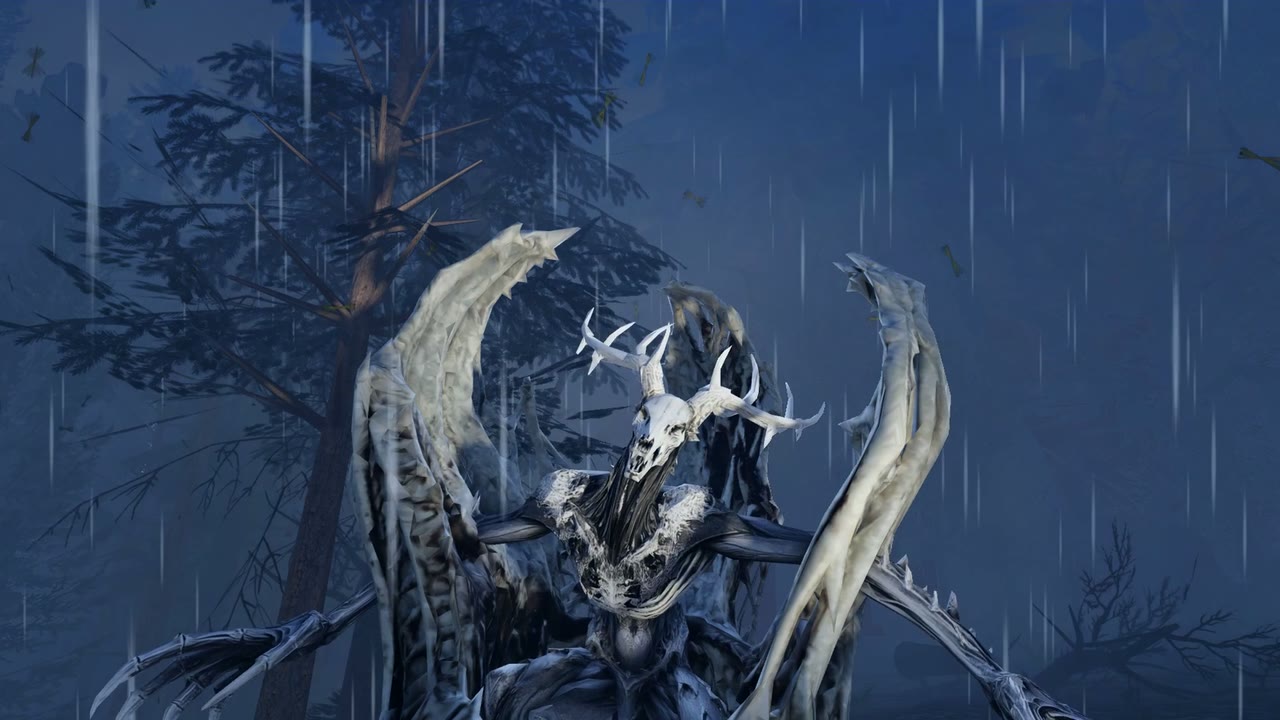
A gaunt spirit of famine that grows with every meal: Starved, then Ravenous, then Gorged. Ground Slam scatters a clumped team, Scream interrupts heals and floods the map with false tracking noise, Snatch drags one hunter into the dark, and Rush tramples everything in a line. Sense reveals prey through walls.
The Long Man
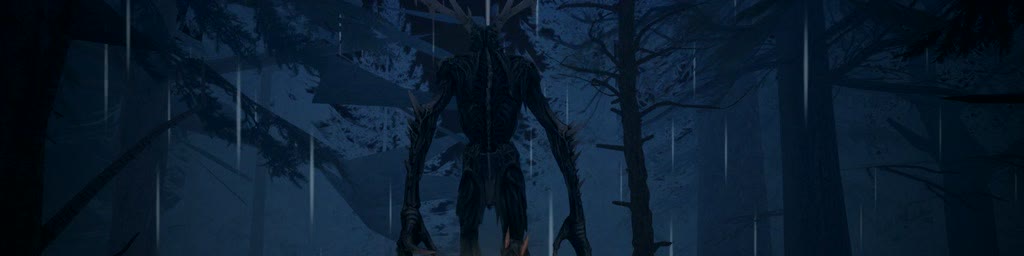
A second monster built on positioning and psychic pressure, pickable today. He Blinks instead of running, his Sense freezes a psychic image of the hunters, Echoes release copies of him to confuse pursuit, Long Reach drags a caught hunter while he keeps moving, and Head Pain leaves the team dazed.
| Class | Role | Weapons | Unique gear | Class ability |
|---|---|---|---|---|
| ExecutionerDamage | The threat that forces the monster to back off | Relic Rifle · Chain Whip | Brand: hits stack sigils, then detonate | Iron Resolve: a damage-soaking stance |
| SanctumHealer | All healing and sustain | Hexlock Pistol · Surgical Vial Launcher (lobbed area heals) | Medkit: a smashable heal field | Mending Burst: an emergency group heal |
| JailerControl | Find the monster, then pin it | Repeating Crossbow (wounds leave a glowing trail) · Tripwire Chimes (alarm bells) | Net Launcher: a harpoon snare | Flare: lights a wide area and reveals the monster inside it |
| SageSupport | Force multiplier and protection | Consecrated Scattergun (pump shotgun) · Banishing Lantern | Decoy: a double that runs while she vanishes | The Veil: hides hunters from the monster's Sense |
Every class is two weapons, one unique piece of gear and one class ability. Every class, and both monsters, live in configuration rather than custom code, which is what makes a new character a content drop instead of a rewrite.
A forest that tells on you
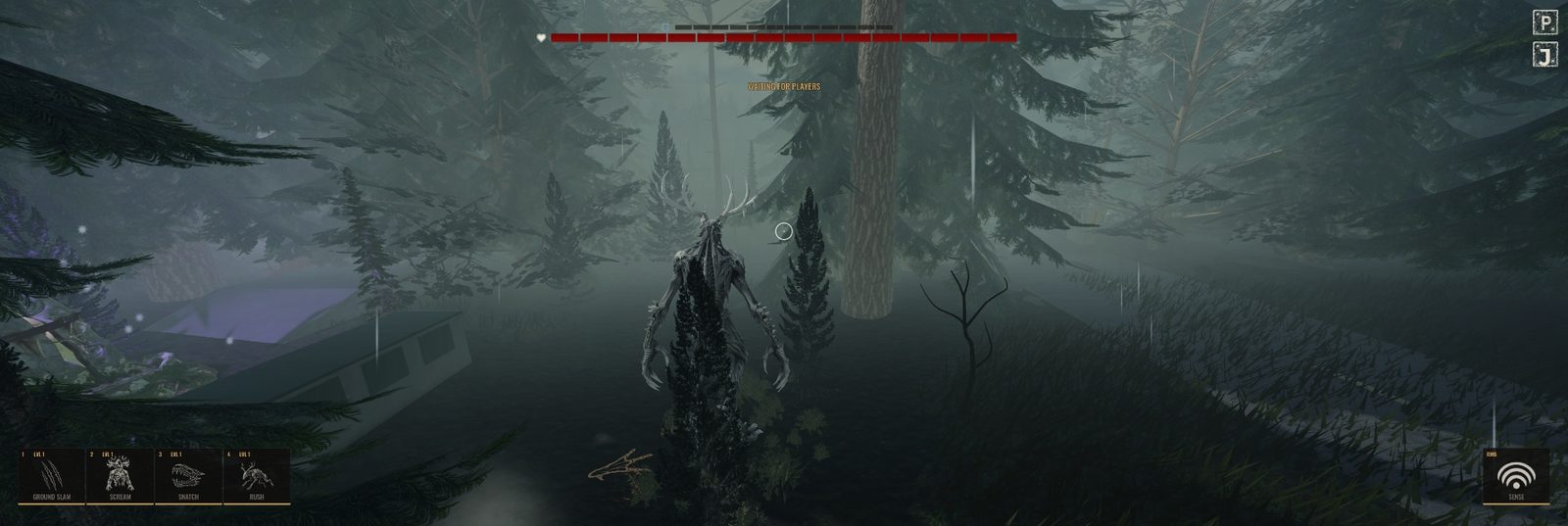
Most Roblox monster games are corridors. WHAT WE KEEP OUT is an open-world stalk: information warfare across real terrain. Wildlife is a system, not scenery. Herds scatter and birds lift when the monster moves, and the woods go quiet where it has already eaten.
Two maps, both playable
BLACKPINE is a dusk boreal forest with a reservoir and dam, a railbed and trestles, a mill, a flume, a quarry and a hunters' camp. BASIN 9 is a forested, abandoned nuclear-industrial disaster zone. Every match rolls one of the two.
Random wet and dry spells, storms that build, falling pine needles and dead leaves, water, day-long ambience and rare one-off sounds (a far-off wolf, a creaking pine) play on each player's own clock.
A food chain that fights back
Deer flee fast and feed a little. Stags fight back and feed more. Bears are hostile to everyone and are the biggest meal on the map. Hunters who shoot a herd leave bait behind, not a denied meal.
A world with a story
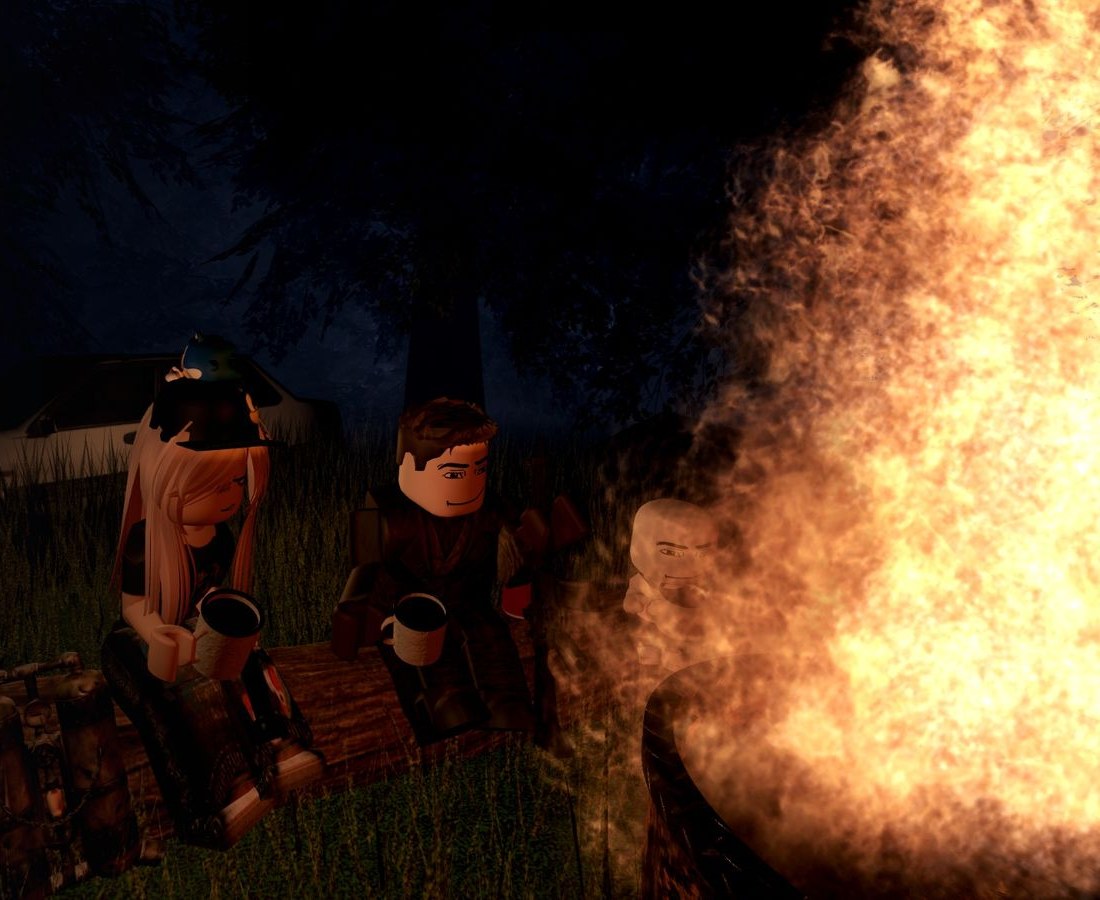
The game opens on a campfire at night. The lobby is a ranger station at the edge of a closed forest, with its own cast (Kessler, Pell, Brisco and The Unlit, the shopkeeper whose file is all but empty) and Case Files: missing-person posters, trail-camera photos and field notes that tell the story of what is out there, one discovery at a time.
This is not a prototype. Every system is running.
A full match runs end to end today: five players enter from the lobby, the server assigns one monster and four hunters, the match plays out on either map, and it ends on a scoreboard whose result is saved to every player's profile.
Combat and characters
- Four complete hunter kits: 16 slots, five guns with first-person arms, aim-down-sights and aimed reloads
- Inspect animations for held guns and gear, plus rare 1% reload gags
- Two monsters with full ability sets, traversal (leap, wall-crawl, crouch) and a three-stage evolution with upgrade choices
- Revives, a downed state, pings, sprint, a traversal rig with dodge bursts, and the team Cage
- Server-authoritative damage: a client never decides whether it hit
Match and online
- A match state machine: lobby, drop, hunt, contain, endgame, post-match
- Cross-server matchmaking with a global queue and teleports into match servers
- Parties that queue together, with our own invite panel and Roblox friend invites; if one member leaves, the rest keep searching
- Role preferences with a fair monster rotation: nobody is stuck in a role they hate
- Spectating, leaver and idle handling, and a post-match scoreboard
- Bots fill a thin queue on whichever side the players did not pick, a bot Monster included; VIP hosts run private matches
Lobby and first-time players
- A separate, explorable lobby behind a campfire title screen: find a match from anywhere, the party radio desk, the Store
- A first-time player picks Hunter or Monster on one card before their first search
- A training range with live wildlife, and a two-sided orientation course
- A guided first round, Gear Up, Case Files lore, and Field Notes on every class, monster, piece of gear and camp character
- Characters in the lobby who walk, work and turn to face you when you talk to them
Progression
- XP from every match drives level, eight rank tiers and titles
- Scrip currency from every match; a loss pays nearly as much as a win
- Weekly challenges on their own menu, in the lobby and in the match
- A cosmetic locker and shop, a VIP pass, player cards and a saved last-match summary
Engineering quality
- Every one of the 3,439 source files is strictly type-checked
- 376 automated test suites run before every change lands
- Tuning numbers live in config, so balance changes never touch game logic
- Internal audits on 27 September, 7 October and 9 October; every launch blocker they found is fixed
Every platform, its own build
- Phone and tablet: our own touch buttons with a separate layout for each role, an editable layout, touch aim assist, phone-specific HUD arrangements and menus laid out to read at phone size
- Controller and TV: every menu works on a gamepad, with pad-specific bindings and text sized for the couch
- Computer: full keyboard and mouse, rebindable keys
- Languages: available in 17 languages, with the game's own words corrected in Spanish, Portuguese, German and French
- Settings: graphics presets, HUD size, reticle and audio accessibility
Running it live
- Kill switches for each map, matchmaking, the shop and rewards, flippable without a new build
- A saved record of every match: result, every player's stats and server performance
- Incident records, ban tools and server-side developer permissions
- Every request from a player's device is validated, bounded and rate-limited on the server
- Movement checks that catch speed and hover cheats yet never punish an honest player, even at 300 ms ping
- A private test copy of the whole game: every update is played there before it goes live
A post that tells you what changed, and a private match that keeps going
Live since 1 November: dated news in the lobby, better endings for private matches, and the game's own words corrected in all 17 languages.
The Dispatch Post
A lit post on the training bunkhouse carries the news: each entry dated, newest on top, on a card as big as Settings. One live line can go up without an update.
Run it back
A private match now ends with a choice: Run It Back, Next Monster or Back to Lobby.
Your last ten
Last Match now lists your last 10 matches, each with the full end board and the trail map.
A radio you can read
The head-start radio is bigger, and each voice has its own color.
More of it yours
Settings adds controller look and aim speed, invert look and reset keys. Phones get a new layout editor and a smaller team list, with the flashlight under the Map.
The game's own words
The game is available in 17 languages. Its names for the Cage, the classes and the abilities are corrected in every one, and a label that runs long shrinks to fit.
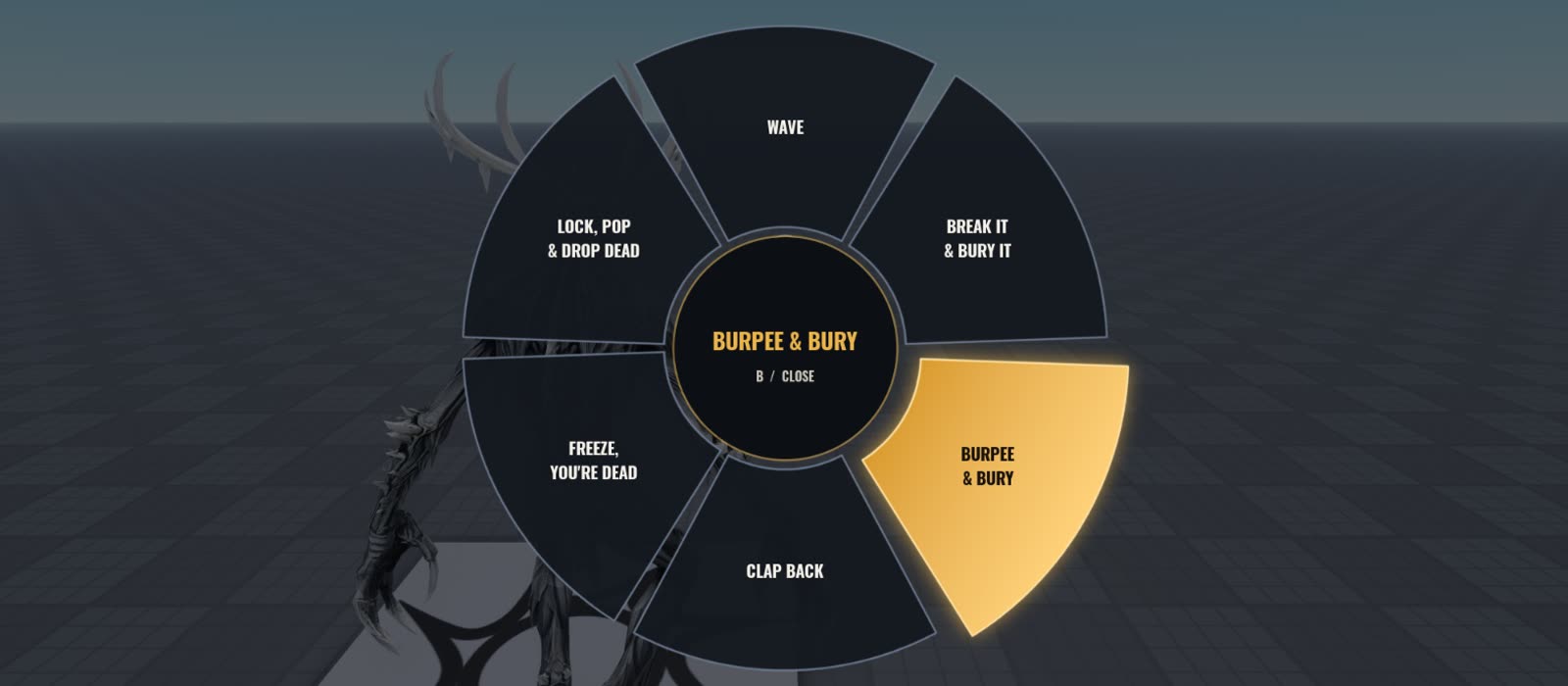
The 26 October update added player cards, premium banners, player lookups from the Tab list and a pie-slice emote wheel on every build.
The question is no longer "is it fun?"
"All five players had genuine fun and wanted to go again immediately after the fourth match."
Proven
- Several closed beta sessions through August 2026, all positive.
- The first live five-player session on published Roblox servers, 15 September 2026: four matches across both maps.
- A family playtest on live servers, 24 October 2026.
- Every player's pay, XP and match record saved exactly once.
- Matchmaking, arrival and match records ran with no incidents.
- The server held about 60 frames a second with five players and a full herd of wildlife.
Honest about what's next
- The hunters won all four live matches, and nobody called it unfair. We tuned the monster's early game right after.
- No match has reached Stage 3 with real players yet; the next session tests it.
- The game is not public yet. Every blocker the October launch audits found is fixed; launch still needs a re-audit, a certified release, a live session that reaches Stage 3 and a real-phone performance baseline.
- Strangers on public servers, matchmaking across two live lobby servers, every purchase end to end, crash-rejoin, bot matches and private matches still need proof on published servers.
Free to play. Cosmetics only. Never pay-to-win.
In a 4v1, anything sold as power ruins the match for the other four players. Power lives inside the match (the monster's evolution); identity lives outside it (skins, titles, emotes).
A two-currency cosmetic shop
Every cosmetic can be earned with Scrip, which every match pays (a loss pays nearly as much as a win), or bought with Robux. 122 priced items today:
Grind or pay: a premium skin is about 53 matches of play, or R$400. Eight Robux products and the VIP pass are live in the build, and the shop shows each player Roblox's own price for their region (the prices above are list prices), and real Robux purchases are verified on the live game.
Pass, seasons and roster
- VIP pass (built and priced since 7 October, R$599): +15% match XP (never currency), 8 emote slots instead of 4, a skull mark by your name, a flare over it as a hunter and a burning name when you play the monster, a voucher for one skin of your choice, and hosting private matches with custom rules.
- A seasonal cosmetic track with themed skins each season.
- New monsters and hunters unlockable with either currency.
- Monster skins stay the lead product. In this genre, monster players are the biggest spenders, and every skin is seen by the four hunters it is chasing.
Built to update every week
The machinery is in place
- Weekly challenges: five goals drawn each week from a pool of 38, never repeating the last three weeks; finish any three for XP and Scrip. This is the deliberate return hook. There is no daily login reward, because a 4v1 needs players queuing together, not just logging in.
- Case Files: 23 lore entries that reveal the story over time.
- Kill switches for purchases, matchmaking, rewards and each map, flipped live without a new build.
- Match records and analytics: every match saves its result, each player's stats and server performance, plus onboarding-funnel and shop analytics.
- Live balance tuning without a new build is built and held in reserve for after launch.
- Bots fill a thin queue on whichever side the players did not pick, so the five-player match starts even before the player base is big.
New monsters are the hype spike
- Characters are data, not code. The Long Man went from settled design to pickable in the match in about a week, without touching the Wendigo. That is the business model: a new monster is a content drop, not a rewrite.
- Monster concepts on file: the Jersey Devil (verticality), the Sasquatch (it attacks the hunters' tracking) and the Rougarou (contagion).
- A second character for every hunter class, each with its own kit.
- Dynamic map events: one announced hazard at a time (a zone closing, a storm that gives the monster cover to feed) as a cheap weekly change.
- More maps: each map is its own place that joins the queue's roll, exactly as BASIN 9 did.
120 days in, and the road to launch
- July 2026
From four grey blocks to a game
First code on 3 July; the feed-and-evolve loop the next day. Then the design thesis, the four hunter kits, saved player profiles, the BLACKPINE map rebuild, the first phone controls and the separate lobby place.
- August 2026
A full game
Cross-server matchmaking (5 August), account progression (levels, ranks, titles), the shop with Scrip earning switched on, and the second monster, the Long Man, pickable from 28 August. Several closed beta sessions, all positive.
- September 2026
Real players, real servers
BASIN 9 joins the map rotation and the Robux shop is built (3 September). The first live five-player session on published servers (15 September). Separate phone and controller layouts for the HUD, menus and controls. A full internal audit on 27 September found no launch blockers. The final name, WHAT WE KEEP OUT (28 September), then bot hunters and private matches (29 September).
- October 2026
A store worth opening, and a queue that never sits empty
The Store and My Locker rebuilt for computer, phone and console, premium gun skins with their own effects, and the VIP pass built and priced (7 October). Launch audits on 7 and 9 October, and every blocker they found fixed. A private test copy of the whole game, bots that read trails and answer calls, on 19 October The Unlit, the first-time role pick and bots that fill whichever side the players did not pick, on 26 October player cards, a pie-slice emote wheel and a TV and tablet pass, and on 1 November the Dispatch Post went live, with the game's own words corrected in all 17 languages.
- Now
Launch prep
A re-audit, a live session that reaches Stage 3, a certified release, a real-phone performance baseline, and live proof of every purchase end to end, crash-rejoin and matchmaking across two lobby servers.
- Target: Q4 2026
Public launch
The experience goes public. This is where launch support and user acquisition make the difference, because the first weeks decide whether the queue fills.
- After launch
Season one
A seasonal cosmetic track, the third monster, and dynamic map events.
One director, and a disciplined AI engineering pipeline
Anthony Claudio
Owns the design, the feel and every final call. Nothing counts as done until he has played it: every weapon, camera and animation in the game was accepted or rejected by him in Roblox Studio. He runs the playtests, the roadmap and the studio, Red Chevron Studios.
AI coding agents, run like a team
The code is written by AI coding agents (Anthropic's Claude Code, with OpenAI's Codex on some tasks) working under a written engineering rulebook: the server owns gameplay truth, every tuning number lives in config, and no change lands until the automated gate passes. That is how one director produced 12,436 commits in 120 days without the codebase rotting.
An original look, with receipts
Original characters, monsters, maps, logo and UI. The pipeline mixes custom 3D models and animation, AI-assisted concept, texture and sound generation, and licensed source assets. Every asset is tracked with a written receipt and published under the studio's Roblox group.
Real players, early
A closed beta group has played every major version, and a community builder, bigwuggy, has helped build the lobby from the start. Every live match writes a record of its result, each player's stats and server performance, so each session produces data as well as opinions.
A 4v1 lives or dies on having five people in the queue at once
The design problem that killed this genre elsewhere is population: a match needs five players, at once, in one queue. The game is built. What decides whether it lives is the first weeks after it goes public.
Launch-day players
Help with on-platform and off-platform user acquisition at launch turns the genre's biggest risk, empty queues, into its biggest strength: a full lobby of people who all want to go again.
Expert eyes on retention and monetization
Weekly challenges, the cosmetic shop, the VIP pass and progression are built. We want Roblox's view of what older players stay for, and where a season track and passes should sit.
Phones and low-end devices
Phone controls and layouts are built for every role. Guidance on rendering and memory budgets for mid-range phones would shorten the road to a certified release.
The "Wait, that's Roblox?" bar
The monsters are custom-built creatures; the hunters are R15 bodies with custom outfits, gear and first-person arms. We want to push hunter fidelity further, and would value guidance on high-fidelity avatars.